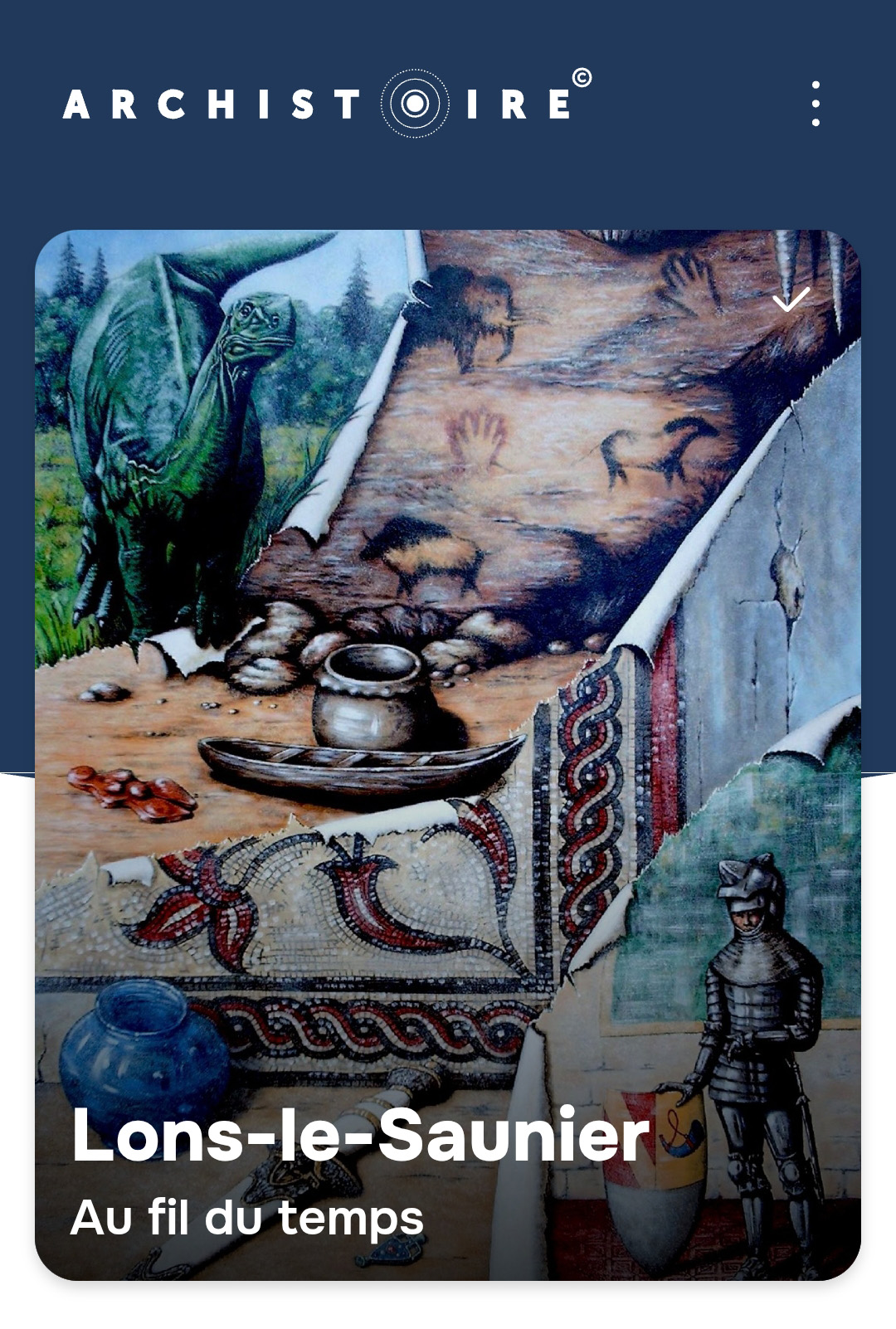
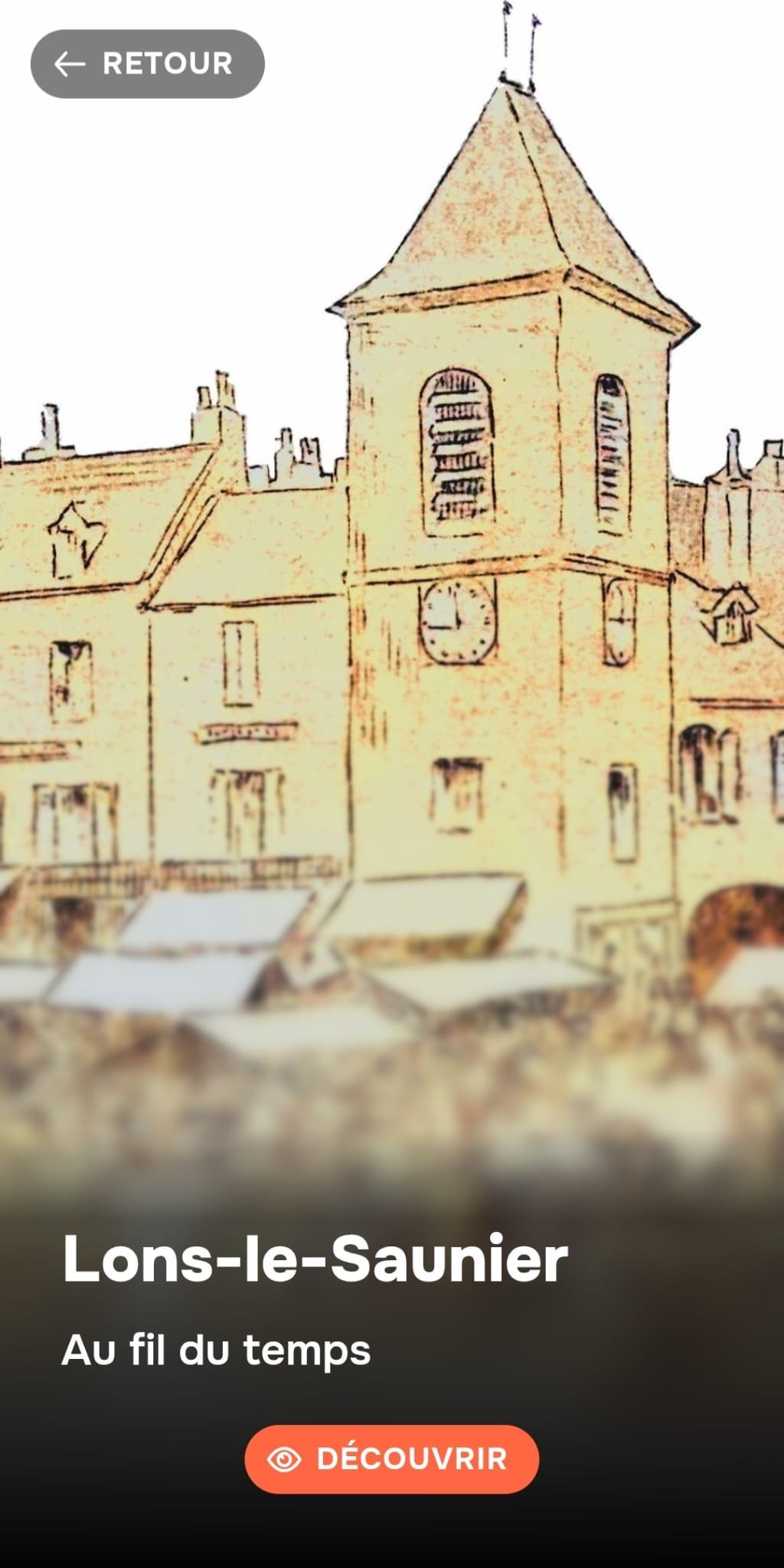
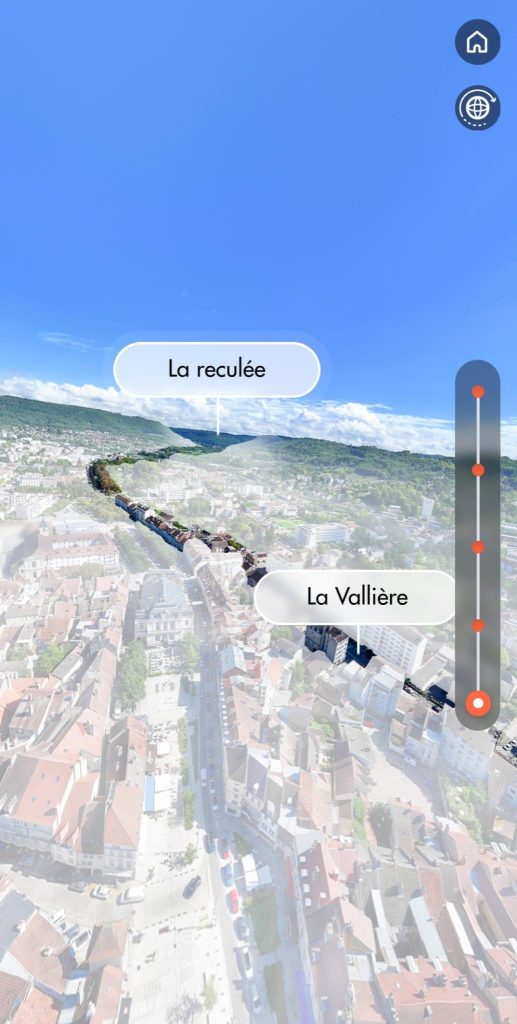
The origins and evolution of the town, from the first human settlements to the present day.
The town of Lons-le-Saunier can be explored in five stages
As early as the Neolithic period, around 4,000 B.C., people frequented the Puits-Salé site and used the saline waters of the spring.
In Antiquity, the town grew towards the Vallière river to the south.
In the Middle Ages, salt mining boosted crafts and prosperity, and the town became an influential regional political, commercial and religious center.
In modern times, the town underwent a metamorphosis following the demolition of its ramparts. Far-reaching urban planning changes prefigured its current appearance.
Today, Lons-le-Saunier is a town-prefecture on a human scale, in an exceptional natural setting.
An exceptional site and development based on local resources.
Lons-le-Saunier was built at the mouth of the Vallière river and its confluence with the Solvan. This met the drinking water needs of the first settlers.
Situated between the Plateau and Bresse, the town grew at the crossroads of the North/South (Besançon/Lyon) and East/West (Geneva/Chalon) axes. It became a major commercial center.
The site provided the natural resources that ensured its wealth and fostered the town’s development:
– The hillside terroir and soil conditions are ideal for winegrowing.
– The salt waters are used for thermal baths and for the production of igneous salt.
Visit the Museum of Fine Arts and its 3 sections (Archaeology, Fine Arts, Natural History)
Download the app



Partners and funders